In 2026, Decentralized Finance (DeFi) has evolved beyond experimentation into a secure, institution-ready ecosystem. This evolution is defined by real yield products, technical RWA integration, and intelligent automation.
 Key Insights: DeFi Evolution in 2026
TVL has reached new heights, sustained by real yield DeFi revenue-share models that replace inflationary incentives.
The proliferation of RWA in DeFi (including treasuries and private credit) creates a stable risk-free rate for on-chain finance.
AI powered DeFi agents enable seamless liquidity management through autonomous account abstraction strategies.
Institutional interest is peaking with the launch of compliant institutional DeFi pools governed by ZK-proof verification.
In 2026, the era of experimental liquidity mining has passed. DeFi has emerged as a structurally sound financial layer where smart contracts act as audited repositories for global capital. The move toward DeFi platform development in 2026 is no longer about speed—it is about verifiable revenue and institutional interoperability.
Smart Wallets
Lending
CCIP
At Blockchain App Factory, we have spent the last three years refining the DeFi trends 2026 development life cycle. This guide serves as a technical whitepaper for engineers, founders, and institutional investors looking to navigate the transition into real yield DeFi, RWA in DeFi, and cross-chain liquidity hubs. By reading this guide, you will understand the underlying architectural shifts making 2026 a landmark year for decentralized finance platform development.
01 // The Real Yield Pivot: Revenue over Inflation
The most significant change in 2026 is the total abandonment of “vampire attacks” and purely inflationary rewards. Modern protocols now focus on Real Yield: yield generated from protocol fees, trading revenue, and underlying asset productivity. This is more than a marketing term; it is a structural redesign of tokenomics.
Economic Model: Revenue-Sharing Vaults
Protocol revenue in 2026 is distributed via ERC-4626 Tokenized Vaults, where stakers receive a portion of actual generated fees (e.g., in USDC or ETH) rather than the native protocol token. This prevents the “farm and dump” cycle and attracts long-term LPs who act as true stakeholders.
We see this in the surge of real yield DeFi platforms that integrate complex algorithmic trading strategies directly into the vault logic. These systems use advanced mathematics to ensure that the yield provided is non-dilutive. By moving away from hyper-inflationary models, projects are building sustainable “moats” that can survive bear cycles. Our DeFi development expertise focuses on auditing these revenue-share mechanisms to ensure they are both secure and economically sound over a 5 to 10-year horizon.
02 // Decentralized RWA Architecture: Bridging the Gap
In 2026, Real World Assets (RWAs) are no longer a niche sub-sector; they are the backbone of DeFi stability. Integrating T-bills, corporate credit, and real estate into on-chain pools has provided the “risk-free rate” that DeFi was previously missing. This integration requires a high level of institutional DeFi technical maturity.
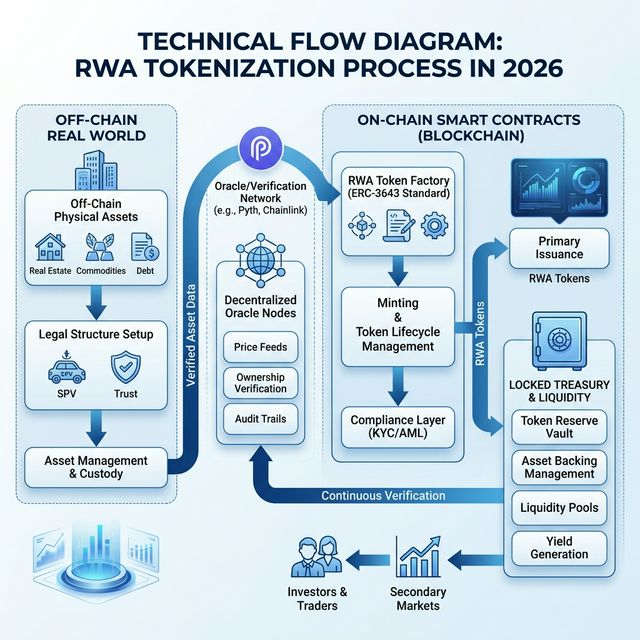 FIG 2.0 // TECHNICAL RWA TOKENIZATION & SETTLEMENT FLOW
The RWA stack in 2026 consists of three distinct layers:
1. The Compliance Layer: Using standards like ERC-3643 (T-REX) and ERC-1400 to manage on-chain whitelisting and regional regulatory restrictions.
2. The Oracle Layer: Real-time attestation through decentralized oracles (Chainlink/Pyth) that verify the existence and valuation of the off-chain collateral.
3. The Settlement Layer: Atomic settlement of RWA-backed tokens against stablecoins or CBDCs.
Our work at Blockchain App Factory involves building the technical bridges that allow these layers to communicate. By leveraging RWA in DeFi, projects are enabling a 24/7 global market for assets that were previously illiquid. This has attracted massive interest from traditional finance (TradFi) players who are now actively seeking DeFi platform development partners to move their asset portfolios on-chain.
03 // AI-Agentic DeFi: The Intelligence Layer
The most disruptive DeFi trend of 2026 is the integration of AI-powered DeFi automation. We have moved beyond simple “if-this-then-that” bots. Modern DeFi platforms use autonomous agents to manage liquidity, optimize yield, and mitigate risk in real-time.
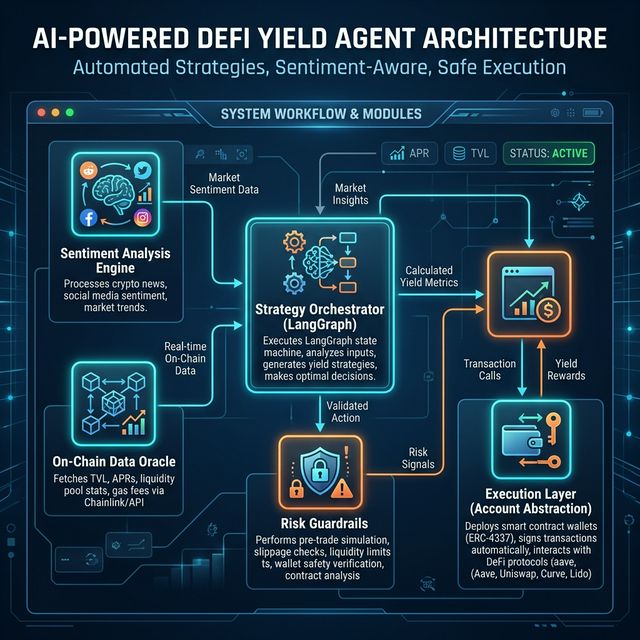 FIG 3.0 // AI-AGENTIC ORCHESTRATION ARCHITECTURE
These AI powered DeFi agents operate using Account Abstraction (ERC-4337), allowing them to sign transactions and execute complex cross-protocol strategies without requiring the user’s manual signature for every step. An agent might detect a liquidity crunch in a lending pool on Polygon and automatically move capital to a higher-yielding vault on Arbitrum while hedging the delta on a perp DEX, all within a single block’s latency.
The technical challenge is ensuring the AI model integrity and preventing “hallucinations” from affecting capital allocation. At Blockchain App Factory, we implement ZK-Machine Learning (ZKML) proofs to verify that the AI’s decision followed the authorized policy before the transaction is settled. This level of DeFi platform development is setting a new standard for user experience and capital efficiency in 2026.
04 // Institutional Grade Security & Compliance
The rise of institutional DeFi has necessitated a focus on security and regulatory alignment that didn’t exist in the early days. In 2026, a “rug pull” isn’t just a loss of funds—it’s a legal liability. Therefore, tokenized finance now demands rigorous security frameworks.
2026 Security Standard: Multi-Sig + Timelocks + ZK-KYC
Institutions require “Permissioned DeFi” where all pool participants are verified via Zero-Knowledge KYC proofs. This allows for regulatory compliance without compromising the underlying privacy and anonymity of the user’s wallet address on-chain.
Our development process for DeFi platform development 2026 includes comprehensive smart contract auditing by multiple independent parties, implementation of decentralized “circuit breakers” to freeze malicious activity, and the use of Formal Verification to prove the mathematical correctness of code. These are no longer optional extras; they are the baseline requirements for any project seeking decentralized finance 2026 institutional adoption.
05 // Cross-Chain Connectivity: The Liquidity Matrix
Liquidity fragmentation was the greatest technical hurdle of DeFi 1.0. In 2026, cross chain DeFi has solved this through “Intent-Based” bridging and shared liquidity hubs. Users no longer care which chain their assets live on—they only care about the execution price.
Modern cross-chain DeFi leverages frameworks like CCIP, LayerZero, and IBC to allow for atomic multi-chain operations. When building DeFi platforms in 2026, we focus on “Omnichain” deployment, ensuring the protocol exists as a single unified liquidity layer across Ethereum, Solana, and assorted L2s. This improves overall capital efficiency and dramatically reduces slippage for large-volume traders. DeFi platform development now requires deep expertise in distributed systems and cross-chain messaging protocols.
06 // Conclusion: The 2026 Roadmap
In March 2026, the success of a DeFi project is measured by its sustainability, security, and scalability. The transition to real yield DeFi, RWA integration, and AI automation is not just a trend; it is a structural evolution that defines the future of finance. The “wild west” of crypto has matured into an architecturally sound, institution-ready ecosystem.
At Blockchain App Factory, we specialize in DeFi platform development that leads the market. Whether you are building an AI-optimized yield aggregator, a compliant RWA gateway, or a high-performance cross-chain DEX, our team provide the technical depth and strategic foresight needed to succeed in 2026’s competitive landscape.
Our Technical Roadmap for Your DeFi Project
Ready to Build the Future of DeFi?
Scale your project with the technical leaders in 2026 DeFi development. Contact BlockchainApp Factory for a free technical consultation and customized development roadmap.